PILGRIMAGE BLOG
Six Yoga Poses for Seniors
Six Yoga Poses for Seniors
By Lena Schmidt
Yoga is a holistic health practice that benefits everyone’s mental, physical, and emotional well-being. It is beneficial for seniors. Americans spend a great deal of time and money trying to look and feel younger, and we sometimes forget that growing older and wiser is a privilege and a blessing many never get. We can make the most of our senior years by practicing yoga, as yoga directly addresses many of the changes that are taking place in our aging bodies and our minds.
Yoga has many benefits for seniors, even those in their eighties and beyond. Even while living a healthy lifestyle, muscles will atrophy, the skin will become looser, and our organs may become less efficient. Bones become brittle and less dense, and energy is often reduced. Yoga to the rescue! Pranayama, meditation, and mindfulness team up with the yoga asanas to relieve many age-related symptoms, including insomnia, stress, loss of energy, and spinal problems related to posture. The yoga asanas tone the muscles and can reduce bone loss. The balancing postures improve muscle coordination. Pranayama and breathing practices calm the nerves and, along with meditation, offer stress relief and bring peace.
Seniors can safely participate and enjoy any yoga practice. Do you want to be more relaxed and sleep better? Do you want to improve your mood and energy? There are several styles of yoga well-suited for seniors. Hatha, Gentle, Restorative, Yin, Chair, and Yoga Nidra would be suitable classes to begin with.
Here are six excellent yoga poses for seniors. They may be modified easily to suit your physical needs. If you are injured or have a physical limitation, adjust the pose to feel more comfortable.
Mountain Pose—Tadasana:

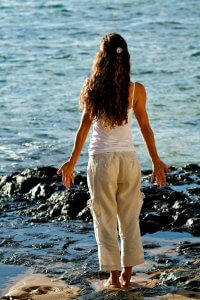
This pose is elegant, empowering, and uplifting. Specific benefits include elongating the spine and strengthening the feet, ankles, knees, leg bones, back, and shoulders. In Mountain Pose, the body is positioned in an accurate anatomical alignment: head over hips and hips directly over the feet. This counteracts the slumping effects that can come with aging or from long periods of sitting.
To practice Mountain Pose: Stand with your feet as wide as your hips. Angle all of your toes forward so that your feet are parallel. Lift your kneecaps and straighten your legs without locking them. Engage your core lightly. Lengthen your spine and stand up tall without arching your back. Reach your arms down by your sides and spin your palms to face forward, open. Actively reach your fingers down towards the ground. Actively reach the crown of your head up to the sky while keeping your chin parallel to the ground. And breathe. It will look like you are just standing there, but a lot is happening. If you cannot stand, practice Mountain Pose while seated up tall in a chair.
Cow and Cat—Durga Go:
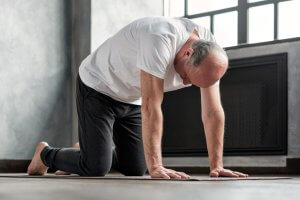
This dynamic, invigorating, and grounding pose has specific benefits for seniors. These include spinal movements of flexion and extension, weight bearing on the hands, wrists, arms, and shoulders, and the fluid breath-to-movement connection. In Cow and Cat, you round and arch your back from your hands and knees (or from a seated position if that feels better!), matching your breath with your movements.
To practice Cow and Cat: (picture desirable) Come to hands and knees—Pad under your knees with a blanket for cushioning. Spread your fingers wide or make gentle fists. As you inhale, gently arch your back and look forward. As you exhale, gently round your back and gaze inward towards your navel. Repeat as a moving meditation for several rounds of breath. If you cannot balance yourself on your hands and knees, practice Cow and Cat while seated on the floor, in a chair, or with your hands on your knees.
Tree Pose—Vrksasana:
This pose requires balance, stability, stamina, and focus. Its benefits for seniors include increased balance, coordination, and weight bearing on the standing foot and leg. In Tree Pose, you balance on one foot while the other leg is bent for a hip opener, and your eyes are focused steadily.
To practice Tree Pose: Stand in Mountain Pose. Bring your hands together to your heart or bring your hands to your hips. Stand with one hand against a wall or a chair if you need extra stability. Transfer your weight to one foot. Turn your opposite knee out and open to the side. Bring your foot to your ankle, calf, or upper inner thigh. Fix your eyes on something that is not moving and breathe. Repeat on the other leg. If you cannot stand, practice reclining Tree Pose on the floor.
Meditation—Dhyana:
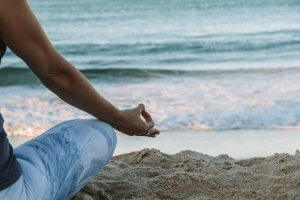
This pose requires stillness and allowing thoughts to come and go. Its specific benefits for seniors include focus, breath awareness, and stress relief. In meditation, there isn’t much to do; you just sit still and breathe.
To practice Meditation: Find a comfortable seat on the floor or in a chair. Place your hands on your thighs and relax your shoulders. Relax your jaw and your forehead. Close your eyes or focus them gently on a single point. Breathe naturally and be.
Waterfall Pose—Vipariti Karani (picture desirable)
The waterfall pose, also called “legs up the wall pose,” is grounding, relaxing, and reinvigorating. Vipariti Karani’s benefits for seniors include reducing inflammation in the feet and legs, increasing blood flow to the brain, and the opportunity to rest and relax. This pose involves lying on the floor with your legs up a wall, chair, or the side of a bed.
To practice Legs Up the Wall: Sit next to a wall. As you roll onto your back, swing your legs up the wall. Slide your hips close to the wall and, if you wish, place a blanket beneath your lower back and head. Allow your feet to naturally separate as much as they would like. Rest your arms up and over your head or down by your sides. Breathe and hold for at least three minutes.
Supported Resting Pose—Supported Savasana
Though you seem to be just lying there doing nothing, the benefits of the supported resting pose for seniors include all the benefits of rest and relaxation. The Supported Savasana, is sometimes called “the corpse pose.” No really!
To practice Supported Savasana: Recline onto your back with a pillow or two beneath your knees. Place a folded blanket beneath your head. Placing a blanket over your entire body or a small cover over your eyes may feel nice. Nestle in, breathe naturally and be still. If it is uncomfortable to rest flat on your back on the floor, practice this pose with bent knees, practice in bed, or with several bolsters under your back and head for a slightly propped-up variation.
These six yoga poses can be done at home without special props or even a yoga mat. They are easy, economical, and extremely beneficial to seniors of all ages. For more on senior yoga see this article: https://www.yogabasics.com/connect/yoga-blog/benefits-of-yoga-for-seniors/