PILGRIMAGE BLOG
How to Reduce Stress
The No Stress Express: Using Yoga to Reduce Everyday Stress Every Day
by Steve “Oak” Jackson
Human Beings, Human Doings
If you own or rent a home, have dependents, a job, a vehicle, a bank account, and a smartphone (most of us) then it is likely you could use yoga to reduce your everyday stress. When we say ‘everyday stress,’ we mean the daily external causes of an internal reaction resulting in the release of neurotransmitters that activate the body’s natural defense mechanisms. Feelings (especially reactive ones) such as anxiety, anger, and fear are the telltale signs of stress at work; the breath becomes rapid and shallow, the muscles tense, and the body prepares for fight or flight – this is your sympathetic nervous system (SNS) at work.
Although the SNS is crucial in matters of survival, we have a bad habit of overstimulating ourselves, seeing smoke where there is no fire, and remaining in a stress state throughout the day. This stress can have long-term negative effects on our lives. The negative effects are exacerbated by poor health choices. On the other hand, when we feel safe, secure, and comfortable, our parasympathetic nervous system (PNS) turns on and helps us to unwind, digest food, and make internal repairs—the body is relaxed, the mind is calm, and the breath is easy. For many people, the answer to their everyday stress is yoga.
Getting Reconnected
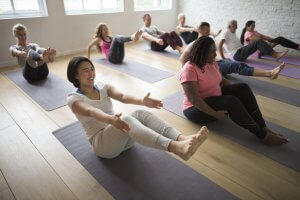
Yoga can be thought of as the art of connecting, as the word yoga “to join” (e.g. ‘yoke’) connotes. Through practice we connect the body with the breath, the present moment, our inner self, and maybe something greater. In the process, we deactivate the SNS and engage our PNS. If you have practiced yoga in any form (movement, meditation, breathwork) you have probably felt the difference between before and after class.
“I feel so much better now!” – Every yogi, ever, at some point.
The question then is, can yoga prevent stress? If so, what yoga techniques or poses are most helpful in reducing stress, and how often should we practice yoga to reduce stress?
A Nerve Runs Through It
The nervous system is a complex web of signals and relays throughout the body. Two of these nerves are well worth remembering. These are the two Vagal nerves (singular Vagus, from Latin to wander). The Vagus nerve wanders the length of the spine down to the digestive tract. The Vagal nerves regulate the critical functions of the PNS. By stimulating the Vagals, we can activate the PNS at will.
The simplest and most effective exercise I have found for this is humming. Give it a try! First, find a comfortable posture and close your eyes. Then, connect with your breath. For a couple of minutes, hum with vigor on each exhale and visualize the vibration along your spine. Then, pause, breathe easily, and notice if anything has changed for you.
Catch your Breath
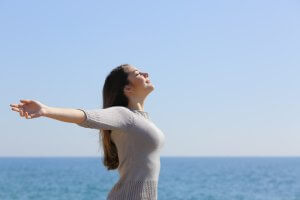
In my personal practice the single most effective tool for reducing stress has simply been paying attention to my breath. By moving awareness inward to the sensation and rhythm of breath, we preclude outside causes of stress. By modifying the pattern of breath, we can send the body a signal through the Vagal nerve to switch off the SNS and engage the PNS. This is done most effectively by deepening the breath and using a longer exhale relative to the inhale.
Give it a try: https://pilgrimageyoga.com/blog/the-power-of-pranayama/ find a comfortable spot, and close your eyes. Notice the sensation of cool air coming into the nostrils, and warm air passing back out the nostrils. Measure your inhale (without strain!) to a count of 4 and measure your exhale to a count of 6. You can experiment with longer breaths and include slight pauses at the top and bottom of each cycle—stay with the breath as long as your attention allows. Try to notice any changes that have taken place.
One last thing. We all breathe and most of us can count, but we often aren’t aware of our breath. If you can practice, you can teach. The next time you see someone having a hard time with stress, offer to coach their breath and share the joy!
Body Movin’
Most folks discover yoga through the practice of asanas or postures. They come back to the mat time after time for the relief yoga gives them. Whether it’s through yoga, lifting weights, dancing, going for a run, or a swim, it just feels good to feel your body feeling good. When it comes to stress reduction, we can achieve more with less by using simple relaxing postures and connecting with breath.
Two of my favorite poses are Child’s Pose (balasana) and Inverted (pictures here) Legs (viparita karani). In Child’s pose, we experience a sense of cooling by folding forward, and by bringing our forehead to the mat. In this pose, we turn our awareness inward and away from external stressors. Placing attention on the sensations of breath takes practice. This pose takes the experience one step further.
For Inverted Legs, bend your legs and place them over the couch or the seat of a chair. Or you can straighten your legs and place them up against a wall. This will cause a subtle change in your blood flow. The sense of relaxation will increase if you keep your awareness on your breath. (This is a great time for an eye pillow!).
The Peace that Abides
Of course, there’s no offense like a good defense! By that, I mean having a disposition where stress rolls off you like water off a duck’s back. As they say, “You can’t control the waves, but you can learn to surf.” The causes of stress will always be present, but we can adopt an attitude of equanimity and compassion. How? With a dedicated meditation practice. If you rolled your eyes just now, it’s okay—doing nothing can be challenging, and despite how much your teachers remind you of its importance, it can be difficult to carve out time for meditation.
To set ourselves up for success—make time and a place to destress, a place where you feel inspired to sit silently, if only for a minute today … it may turn into two minutes tomorrow. As with most difficult things, there’s a certain threshold you will eventually cross. That will be when meditation feels natural and as necessary as eating or sleeping. At that point, you won’t absorb and store stress the way you did before because you will possess a rich sense of inner peace. Keeping your cup full means remembering to return to your meditation practice regularly with grace and gusto. Be well.