PILGRIMAGE BLOG
Sujantra’s Story: Chapter 24 My Mom’s Passing
Welcome to the twenty-fifth blog in a series about my spiritual journey. You can pick up this tale at any point. Earlier blogs may reveal more details about the characters and scenes you encounter in this blog. Enjoy. –Sujantra
Chapter 24
My Mom’s Passing
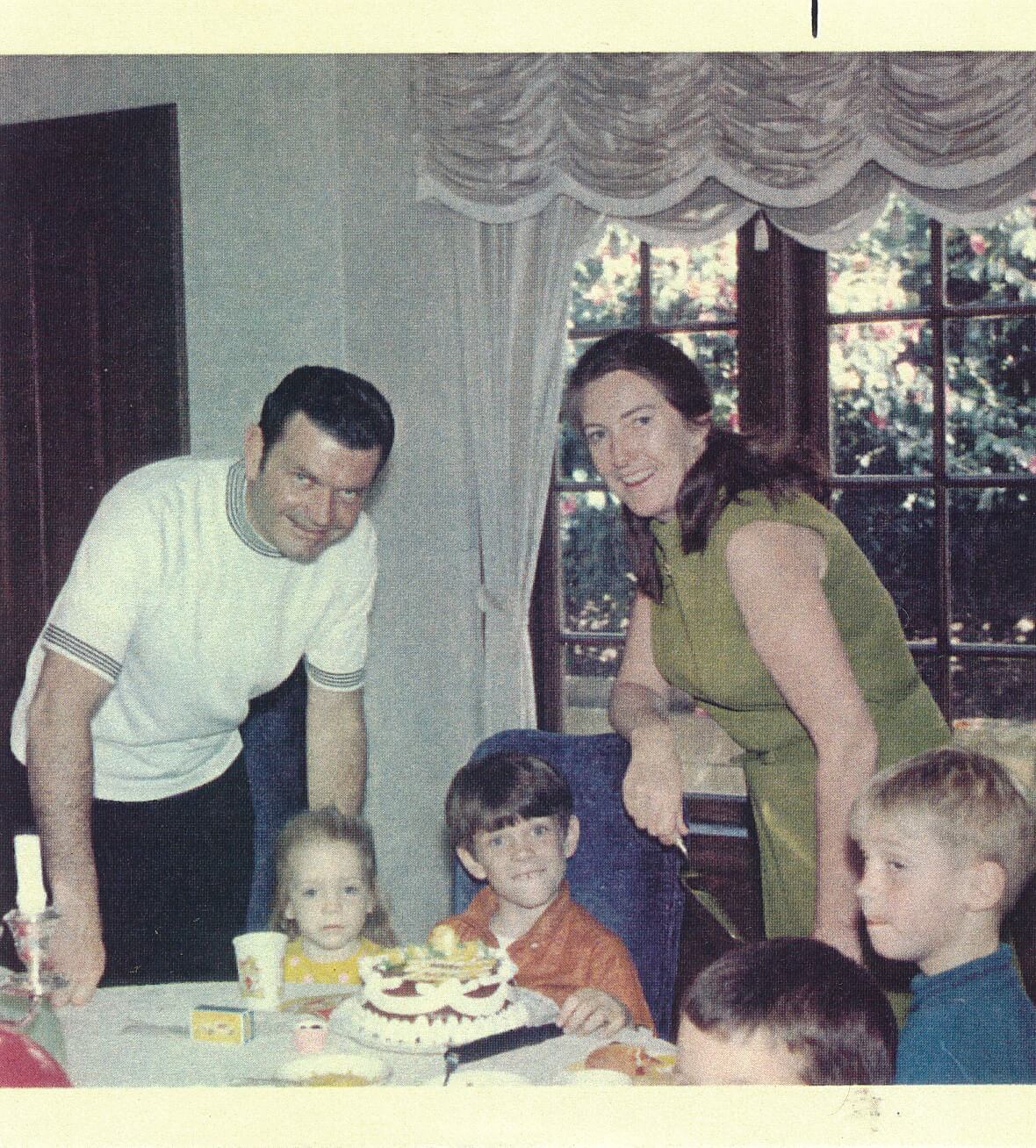
Sujantra with parents and young friends
My mother was diagnosed with breast cancer in 1991. She was just 60 years old. I was told about her illness upon returning from the section of the Christmas trip that I had gone on, and I immediately sent a message to Guru. A few weeks later, Guru was returning from the Asian portion of the trip. As soon as he saw me, he immediately asked about my mom with such concern. My mom had some lymph nodes removed and a round of radiation. Things went well, and the cancer went into remission.
My mother was a neurologist. When my mom was 69, the cancer metastasized to her liver. An intense round of chemotherapy knocked it back down for another three years, but when it reappeared at age 72, her cancer no longer responded to treatment. She focused on quality of life. She would live for three more months.
By early in the year 2,000, my spiritual life was well focused. My mother’s bout with cancer drove home the importance of achieving my heart’s desires while still having the time. My mother deeply loved life. When she learned she was dying, it saddened her. She had hoped to live to 84. There were still so many things in life she wanted to experience.
On Thanksgiving night in 2002, ten months before my mother’s passing, my father, mother, and I were returning home from visiting a cousin. It was a misty night. We passed a nice restaurant just as some young and well-dressed couples came out. They were laughing, and it was obvious they were having a wonderful time. My mom looked at them and sighed soulfully, “Oh,” she said, “How I wish I could be young again.” In that moment, I knew reincarnation was real.
During my mother’s illness, Hiyamallar, one of the disciples in San Francisco who was also a neurologist, was asked by the Guru to organize a “Lifting Up the World Event.” This event gave Guru the opportunity to honor people who had made a contribution to others. Guru told Hiyamallar he wanted to lift at least seven doctors. Hiyamallar asked my mom if she would like to be lifted. She would have done it, but she was going to be away at a conference that weekend. She did arrange for a few of her doctor friends to take part in the event.
When Guru heard that my mother would not be back from her conference until Sunday evening after the lift event, he offered to have the machine set up for a special lift just for her. Unfortunately, my mother’s schedule was such that even that could not be arranged.
My mother passed away in our family home in September of 2003. During her final days, she drifted in and out of consciousness. I once asked her what it was like in that place to which she was drifting. She said, “Everything is complete.” Those were the exact words Guru used to describe the state of Samadhi: “You see there [in Samadhi] that almost everything is done.” I knew then that the place to which my mother was transitioning was soulful and beautiful. My mother’s words also mirrored a few experiences I had had in deep meditation. When I told Guru that my mom had passed away, it was not news to him. He said that her soul had already come to him.
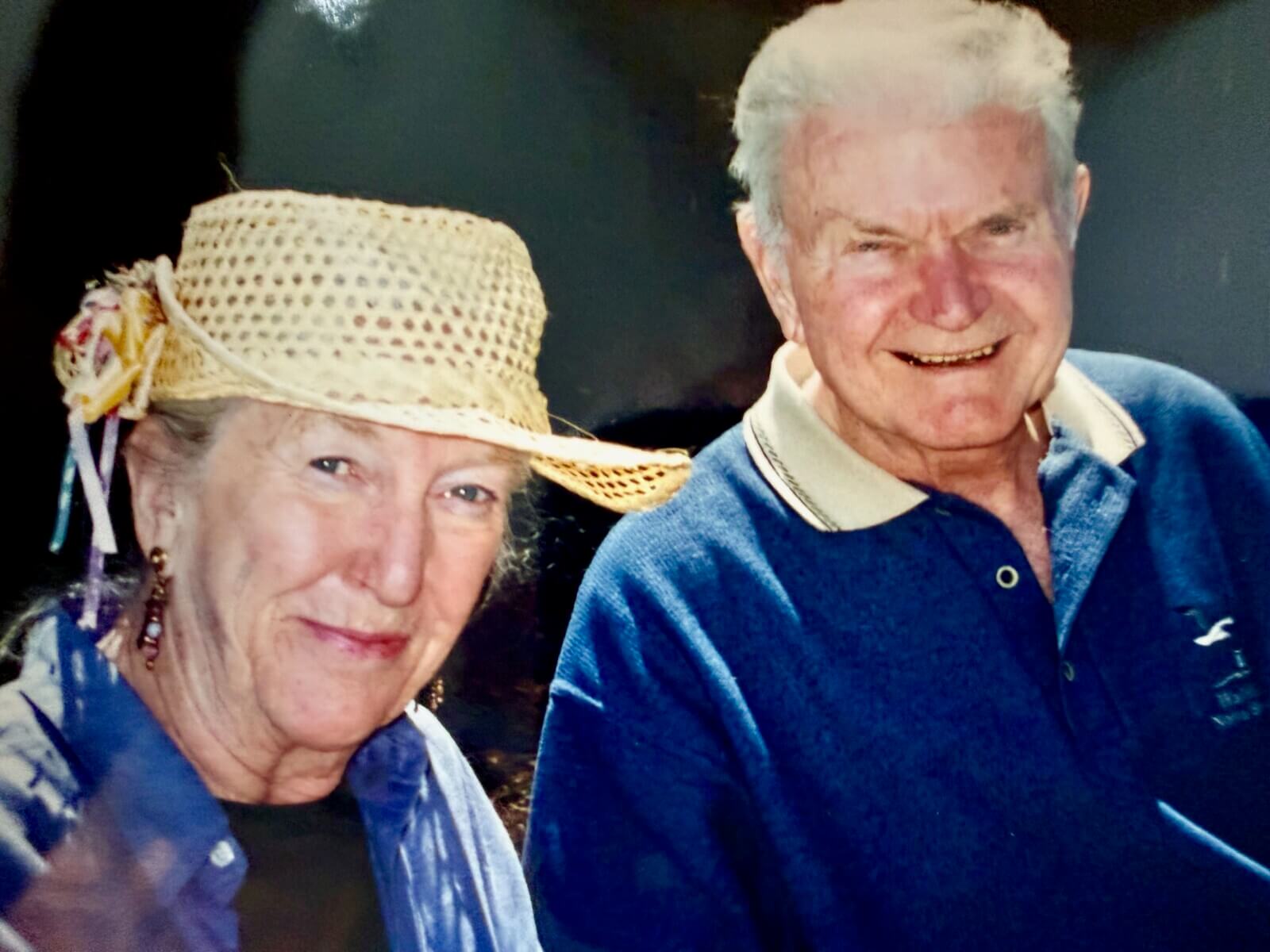
My mom and dad in Florida
In the year leading up to my mother’s death, I read a book on Gestalt Therapy by Fritz Perls, and another by Elizabeth Kubler Ross entitled, On Death and Dying. These books were a great help to me in dealing with my emotions as I struggled to accept my mother’s condition. One of Perls’ concepts is “equilibration.” This is the internal action of creating equilibrium within our being. This is done through assimilation and accommodation. Living beings always seek equilibrium. New perceptions must always be ingested and digested. Perls uses the term “equilibration” when referring to our assimilation of experience. If you don’t chew your food, you do not get what you need from it. The same applies to the experiences that life gives us.
Perls also talks about the idea of “schema” (schemata). These are intellectual, psychological (mental and cognitive) structures (processes) through which we organize (classify) our perceptions (events, objects, experiences) of the environment. These psychological structures adapt and change as mental development progresses. They result in concepts and categories of knowledge and experience.
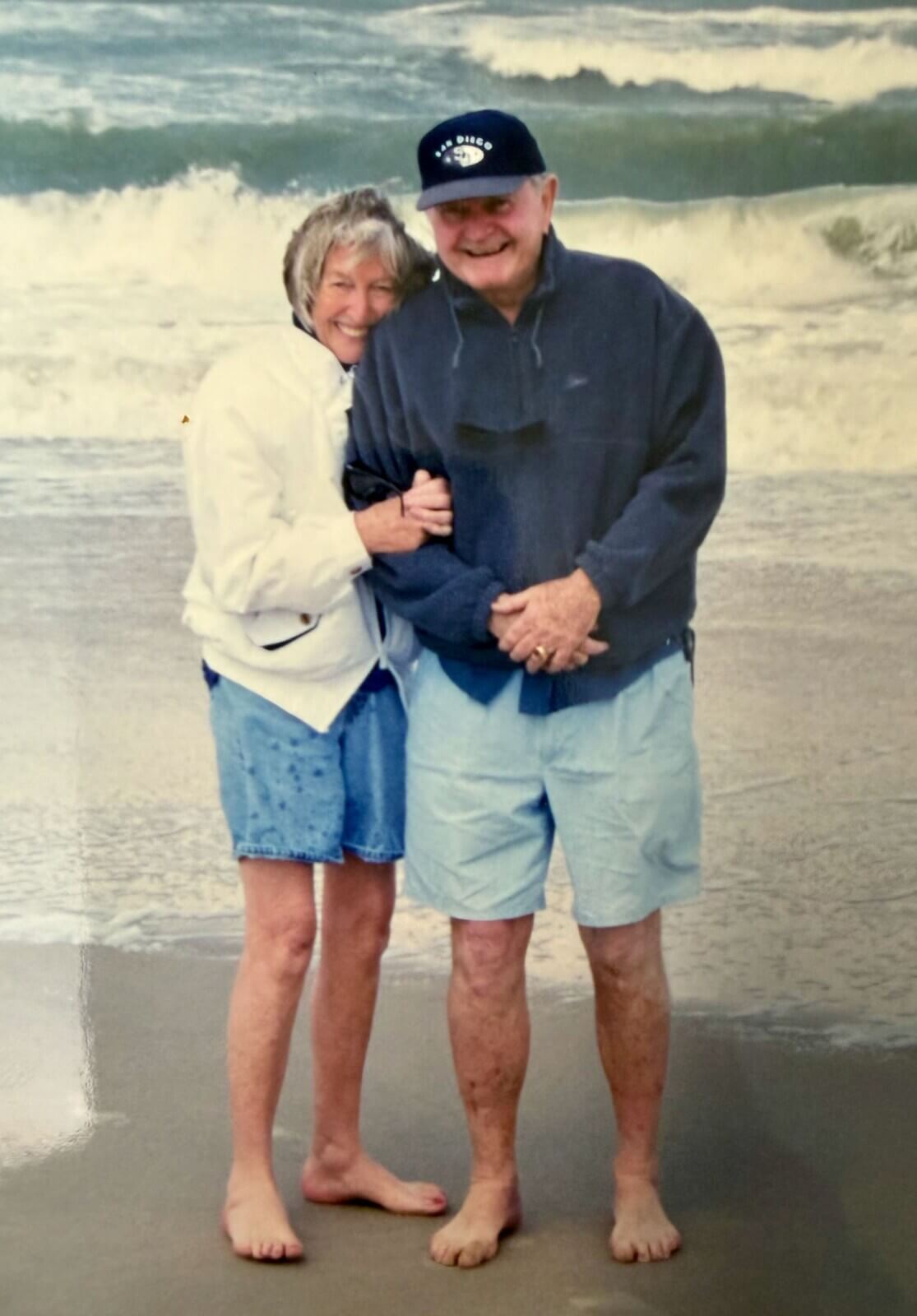
My mom and dad are enjoying a relaxing afternoon.
I made use of these ideas after my mother’s death. Initially, her passing caused a great disequilibrium in my life. I needed to create new schemata to deal with this traumatic event. I created a new category of experience in my life: “Things that suck that I can’t do anything about.” Into this category I put aging, death, pain, disease, and natural disasters. Through this new schemata, I can digest most any experience. Through it, I can keep an inner balance in my life.
My mother’s death caused me to intensify my spiritual practice. Each evening, for about four months after her passing, I went to a local café and spent an hour journaling. I wrote out my memories of her and reflected on all she had taught me. One day, I had a very tangible sensation of her that convinced me she lives on inside my consciousness. That feeling still remains with me, and I feel the exact same way about Guru.