PILGRIMAGE BLOG
Seeing Clearly – Yoga for the Eyes
By Lauren McClaren
When it comes to the practice of yoga asana,1 we generally conjure up images of strong standing postures like the Warriors or delicate balance postures like Dancer, and it is easy to see how the practice of these postures will help us to grow our strength, lengthen our muscles, and find steadiness and poise on our mats. We can experience how working with our breathing can change how we feel, and many of us know the sweetness of release into the final relaxation of a practice. These are all excellent reasons to do yoga, but the benefits of yoga run deep into our anatomy and physiology. While we might not consider it at first glance, yoga is also an excellent practice for our eyes.1
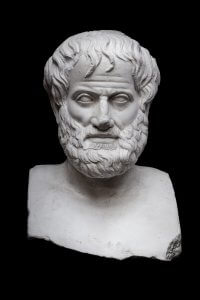
In the 4th century BCE, Aristotle created a hierarchy of senses, putting vision at the top of the list, claiming that we use this sense the most to determine how to interact with our surroundings. While this is less true in modern times, largely because of technological and medical advancements, sight is still one of the most powerful and valued senses we possess. Emma Yasinsky writes in Discover Magazine, 2 that sight uses about a third of the brain to process and interpret visual information. Sight is also often deemed as the most important sense 3 by people. A study in the UK in 2019 found that people would on average choose 4.6 years of perfect health as an alternative to 10 years without sight.
Our eyes and our eyesight are of great importance to us, and we use our eyes nearly constantly. Besides accessing our phones and tablets, many of us work on computers for hours, and our old friend, the television, also needs visual attention. We look both ways before we cross the street; we stare into the bright lights of oncoming traffic, and we expose our eyes to pollen and pollution every time we step outside. With all of these demands and detriments to our eyes, it’s important to take some time to care for them. A yoga practice can help to reduce eye strain and dry eyes as well as counter the effects of looking at a screen.
The good news is that many poses you already practice are great for eye health. 4 Yoga postures like Downward Facing Dog 2 and Child’s Pose 3 will help to reduce inflammation and support circulation around the eyes. Any inversion will be helpful for bringing revitalization to the eye area, but even gentle poses like Savasana 4 and Crocodile 5 are good for reducing stress and strain in the eyes.
Beyond these familiar asanas, there are some practices specific to the eyes that will build strength in the muscles and keep the connective tissue and fluids in the eyes healthy. When we work with yoga poses for our eyes, we are looking for any positions or actions that will improve circulation to the area around the eyes and the blood vessels within them. When we improve circulation, we decrease stress in the area and encourage lymphatic drainage, which will help to reduce puffiness and swelling around the eyes.

If you want to give your eyes a treat and a treatment, explore some of the techniques below as additions to your yoga practice.
- Trataka 5: This is a gazing practice that helps to strengthen the eyes. To perform Trataka, choose something to look at: this could be a candle flame, a photograph, something in nature – anything unmoving on which you can keep a steady gaze. Look gently at your chosen object for up to 5 minutes. Do your best not to blink too much. You may find your peripheral vision wanes as you practice. This is completely normal, and it will return once the practice has ended.
- Round the Clock 6: this practice will strengthen the muscles of your eyes by working them in a specific way. Begin by gazing straight forward. Then move your eyes around the clock, starting at 12. Move your eyes only as you shift from 12 to 6 to 3 to 9, and so on. Move your eyes in all directions holding them on a gazing point until you feel a light sense of stretch in the eye.
- Focus Shifting 7: this will help you develop your ability to focus your eyes at different distances. Begin by extending your arm with a loose fist, the thumb pointing upward. Focus on your thumb for a breath and then shift the focus to the wall in front of you. Return your focus to your thumb and then alternate between these two focal points for as many as 10 rounds.
- Palming 8: this is a very soothing practice that helps to relieve eye strain. To perform Palming, rub your palms together to generate some heat. After a few moments, place the palms over your eyes, bathing them in a warm, friendly darkness for 5 breath cycles. This is an excellent practice to take immediately after you’ve done other eye work or right before your final relaxation.
There is emerging science to support the claims that we can practice yoga for our eyes. Working with any of these techniques for just a few minutes a few times a week will have a positive impact on the health of your eyes. In a study conducted in June 2020, a control group led by a trained yoga instructor reported a significant decrease in eye fatigue levels after six weeks of eye yoga exercises. The group included medical college and undergraduate nursing students. They did a regimen of eye yoga exercises for 30 minutes a day, five days a week.
One of the best things about yoga is how it affects the whole body/mind system. Anytime we are practicing yoga asana, we’re doing a good service to our whole body, and the eyes are no exception. Practicing with an intention of eye health will help you to protect those peepers, and maybe we’ll even be able to see ourselves with a bit more compassion.